
Pepper-Grinder by Funansheng Compares Alkaline vs. Rechargeable Battery Costs for Electric Salt And Pepper Grinder Sets.
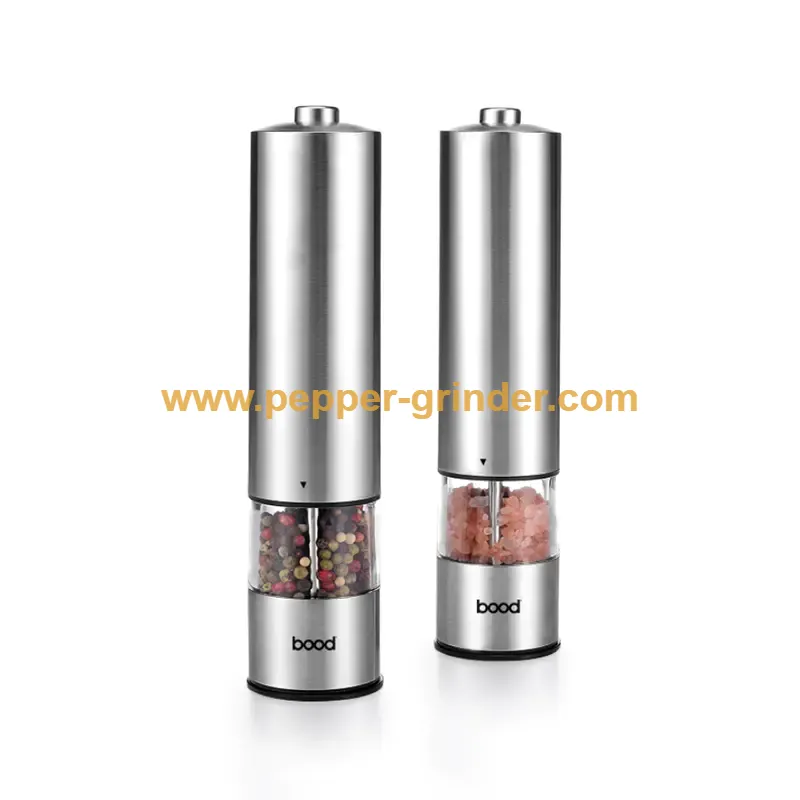
A home cook buys an Electric Salt And Pepper Grinder Set. The package says “requires 12 AAA batteries.” He installs them. Two months later, the grinders slow down. He replaces all 12 batteries. An Electric Salt And Pepper Grinder Set from Pepper-Grinder, produced by Yongkang Funansheng Industry & Trade Co., Ltd., uses battery power efficiently. Yet many users do not calculate the long-term cost of disposable batteries. This situation raises a direct question for any kitchen gadget buyer: why do some electric salt and pepper grinder sets require up to 12 AAA batteries total, and how does this affect long-term operating costs?
Each grinder in a set has its own motor. A salt grinder and a pepper grinder need separate power. Pepper-Grinder's set includes two grinders. Each grinder takes 6 AAA batteries. The total reaches 12. A single grinder with fewer batteries would have less torque. The motor needs enough voltage to turn the ceramic burrs against hard peppercorns and rock salt. Six batteries in series provide the necessary power. A design with fewer batteries would struggle with coarse salt.
A standard AAA alkaline battery costs a modest amount when bought in bulk. Pepper-Grinder's set with 12 batteries needs replacement every few months. A household that seasons daily may replace batteries multiple times per year. The annual battery cost adds up. Over two years, the battery expense may approach the original purchase price of the grinder set. A user who buys the cheapest batteries may also face leakage. Leaked battery acid destroys the metal contacts inside the grinder.
A rechargeable battery option changes the math. Rechargeable AAA batteries cost more upfront. Pepper-Grinder's set works with NiMH rechargeables. A user buys a set of 12 rechargeable batteries and a charger. The upfront cost is higher. After the first few charge cycles, the user stops buying disposables. The cost per grind drops. A family that uses the grinders daily recoups the rechargeable investment within a year. A casual user who grinds spices occasionally may prefer disposables.
The motor's efficiency affects battery drain. A highefficiency motor grinds more pepper per battery charge. Pepper-Grinder's motors use a specific winding design. The motor draws less current when the burrs are not under load. A lowerefficiency motor in a cheaper grinder drains batteries faster. The user replaces batteries more often. The long-term cost of the cheap grinder exceeds the price of a better grinder. The buyer who looks only at the shelf price misses the operating cost.
Standby power consumption matters even when the grinder is off. Some electric grinders have a small current draw from the switch circuit. Pepper-Grinder's design uses a mechanical button that disconnects power completely. No standby drain occurs. A grinder with an electronic touch switch consumes battery power 24/7. The batteries deplete even when the grinder sits in a drawer. The user replaces batteries that were never used for grinding. The operating cost rises without any benefit.
The type of spice affects battery life. Grinding coarse rock salt requires more torque than grinding black pepper. Pepper-Grinder's salt grinder works harder than the pepper grinder. The batteries in the salt grinder run out faster. A user who replaces both grinders' batteries at the same time wastes the remaining charge in the pepper grinder. A savvy user replaces each grinder's batteries individually. The total battery cost per year drops. The set's design allows independent battery replacement.
User behavior changes battery consumption. Holding the button for a long time wastes power. Pepper-Grinder's grinders deliver a full dose of seasoning in a short burst. A user who holds the button continuously grinds more spice than needed and drains the batteries faster. The same amount of seasoning ground over several short presses uses less battery power than one long press. The motor's starting surge consumes the most energy. Frequent starts and stops increase total battery use.
Battery quality varies widely. A cheap alkaline battery from a dollar store may last for a fraction of the cycles of a namebrand alkaline. Pepper-Grinder's test lab shows that lowquality batteries leak or lose voltage quickly. The user who buys the cheapest batteries actually pays more per grind. The leak damages the grinder. The user must buy a new grinder. The operating cost includes replacement of the entire unit. A quality battery from a reputable brand protects the grinder and lowers long-term cost.
For any kitchen considering an electric grinder, https://www.pepper-grinder.com/product/ shows Pepper-Grinder's Electric Salt And Pepper Grinder Set battery guide, where Funansheng engineers list power consumption, battery life estimates, and rechargeable recommendations for each model. A grinder set that burns through disposable batteries costs hidden dollars each year. A grinder set designed for rechargeables or lowdrain efficiency saves money over time. Does your current grinder's battery expense stay hidden in your grocery budget, or do you count every cent of operating cost?

 English
 Arabic
 French
 Spanish
 Deutsch
 Turkish
 Dutch
Dutch
 Italiano
 Russian
 Romaian
 Portuguese (Brazil)
 Greek
Greek